The Candy Wars Part II: Dove v. Bliss in a Copycat Commercial Dispute
By: Polina Tankilevitch
The Candy Wars: Background
The Hershey Company (“Hershey”) was founded in 1894 by founder and family patriarch Milton Hershey. [1]. The now-famous Hershey’s Milk Chocolate Bar was released a few years later in 1900. [2]. Hershey is best known for their candy products, including Hershey’s kisses, Reese’s, Twizzlers, KitKat, Bubble Yum, Milk Duds, and Almond Joy. [3]. Hershey also owns several snack brands, including Skinny Pop Popcorn and Dot’s Homestyle Pretzels. [4].
Mars Inc. (“Mars”) is an American manufacturer. [5]. Mars owns several candy brands, including M&M’s, Wrigley’s gum, Snickers, Twix, Orbit, Milky Way, Skittles, and relevant to today’s article, Dove. [6]. While Mars is known for its business in the candy sector, about 57% of Mars business is actually pet food and pet services, including the well-known brands Pedigree, Iams, Royal Canin, VCA Animal Hospitals, and Banfield Pet Hospital. [7]. Mars’s roots stretch all the way back to 1911, when Mars family patriarch and founder Frank C. Mars began selling butter cream candy out of his kitchen. [8].
As discussed in Part I of our series, for two decades, Mars and Hershey had a friendly and lucrative business relationship. Indeed, one of Mars’s most famous brands, M&M’s, was originally a joint venture between the two companies, and was even named after the collaboration: Forrest Mars (Mars), & Bruce Murrie (Hershey). [9]. However, in the late 1950s, the relations between the companies broke down completely after a heated argument between Forest Mars and Bruce Murrie devolved into a full-on brawl. [10].
Today the relationship between the two companies is competitive and litigious. Mars and Hershey have sparred over numerous intellectual property disputes regarding their respective candy brands. In Part I, we covered the 1997 lawsuit where Hershey sued Mars alleging that Mars’s Peanut Butter M&M’s diluted Hershey’s Reese’s trade dress.
Part II of our series covers the 2009 lawsuit Mars, Incorporated v. The Hershey Company, filed in the Eastern District of Virginia. In this case, Mars sued Hershey over its Bliss chocolate commercial, claiming that it “blatantly copies” Mars’s DOVE commercial and therefore infringed, among other things, Mars’s copyright registrations for the DOVE commercial.
DOVE: the Silky-Smooth Chocolate
"02.14.12" by colemama is licensed under CC BY-NC-SA 2.0.
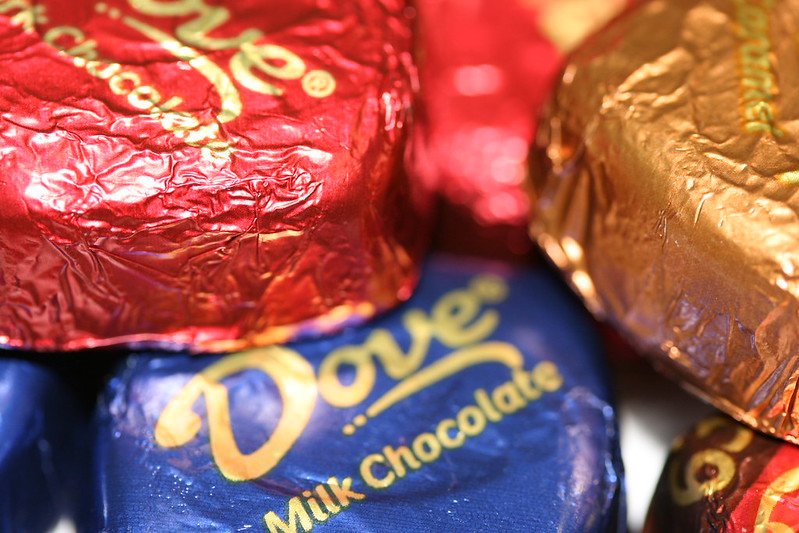
The story of DOVE begins in 1939 when Leo Stefanos, a Greek-American, opened Dove Candies & Ice Cream on a busy street corner on the south side of Chicago. [11]. One summery day in 1956, Leo watched in horror as his son chased after an ice cream truck on their very busy street. [12]. This incident motivated Leo to create an ice cream bar that his son could enjoy in the safety of their store. [13]. Leo spent the next few months experimenting in different techniques of dipping ice cream slices in chocolate, and eventually created the DOVEBAR: a hand-dipped ice cream bar wrapped in silky smooth chocolate. [14].
In 1977, Leo passed the torch of Dove Candies & Ice Cream to his son Mike, who took the company to the next level after bringing DOVEBAR to the Fancy Foods Show in Washington, D.C., in 1984. [15]. The success of the DOVEBAR caught the eye of Mars, who acquired the company in 1986. [16].
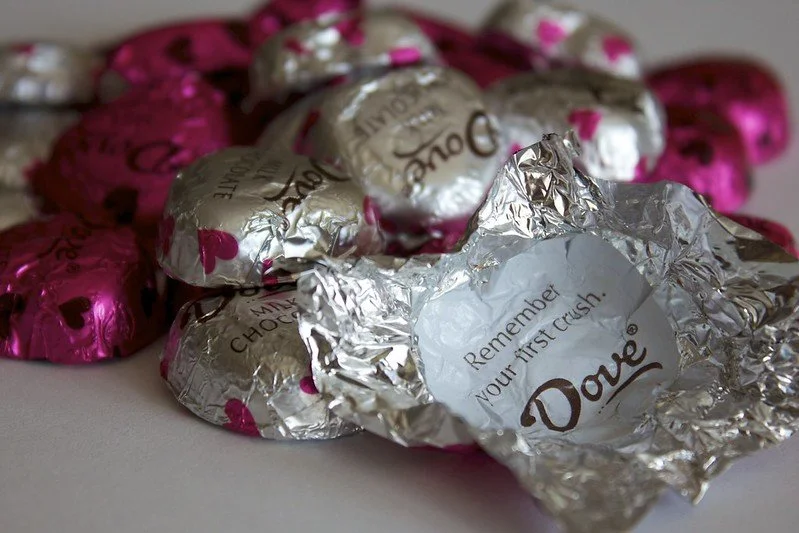
Around this time, Mars launched the DOVE chocolate bar which, along with the ice cream DOVEBAR were sold nationwide, making DOVE a household name. [16]. In 1991, Mars introduced Dove Promises to the marketplace, which were bite-sized, individually wrapped pieces of chocolate available in milk chocolate or dark chocolate varieties. [18]. A unique aspect of Dove Promises is the wrapping: on the inside of each wrapper is an inspirational or romantic message. [19]. DOVE has a unique place in the candy universe in that its target demographic is adults, not children. [20]. DOVE has curated its reputation of being the Valentine’s Day chocolate of choice and, according to Mars, is very popular among adult women. [21].
"Dove" by pamramsey is licensed under CC BY-NC-ND 2.0.
In fact, DOVE chocolate was (and still is) so popular among adult women that Mars developed two TV commercials directly marketing DOVE Promises to them, the “Senses” Commercial and the “Senses with PB Tag” commercials (together, the “DOVE Senses Commercials”). [22]. Mars sought and obtained federal copyright registrations for the DOVE Senses Commercials. [29].
While business was booming for Mars in 2008 when the Dove Senses Commercials started airing, the same could not be said for Hershey. [30].
Bliss: Hershey’s Rival Premium Chocolate Product
2007 was a rough year for the Hershey Company financially. Hershey’s sales essentially flat-lined and its income, excluding restructuring charges, fell 15%. [30]. The poor performance of the company caused the Hershey Trust, the largest shareholder of the company, to clean house and overhaul the board of directors. [31]. This reportedly caused Chairman and Chief Executive Richard Lenny to abruptly depart the company in October 2007. [32].
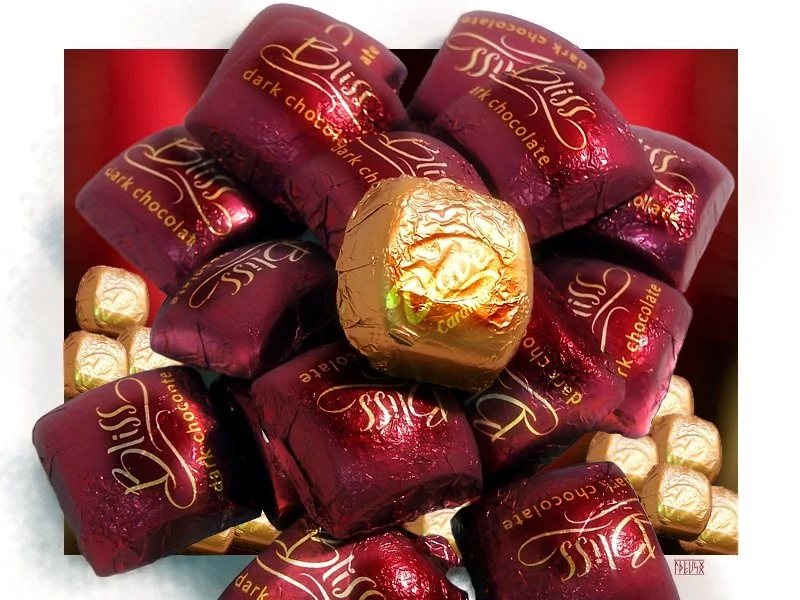
At least part of Hershey’s stagnated sales was because the company did not have any premium and dark chocolate products, which were very popular at the time. [33]. Accordingly, in an effort to right the ship, Hershey’s partnered with Starbucks and launched Bliss in 2007, which was its grand entrance into the premium chocolate game. [34]. In an interview with the Los Angeles Times in 2007, Jay Cooper, Vice President of U.S. chocolate brands for Hershey, candidly acknowledged that “[t]he Hershey’s Bliss launch absolutely is a major launch for [Hershey’s].” [35].
"Chocolate" by DeusXFlorida (11,059,330 views) - thanks guys! is licensed under CC BY 2.0.
Accordingly, two things were abundantly clear in December 2009 when the lawsuit was filed: Mars’s Dove Chocolate products were the crème de la crop of premium chocolate products, and Hershey had a lot riding on the success of Bliss, it’s new premium chocolate product.
Background: Copyright Infringement
As mentioned above, Mars sought and obtained copyright registrations for its the DOVE Senses Commercials. [36]. Mars claims that Hershey’s commercial for its new Bliss chocolate willfully infringed Mars’s federally registered copyrights for its DOVE Senses Commercials. [37].
The United States Copyright Act provides that the owner of a copyright for a particular work has certain exclusive rights over the work. [38]. A person who violates any of those exclusive rights is an infringer of the copyright. [39]. To be liable for copyright infringement, a plaintiff must show (1) ownership of a valid copyright and (2) that defendant copied “constituent elements of the work that are original.” [40]. Mars has two federally registered copyrights in the DOVE Senses Commercials, so the first element of copyright infringement is satisfied. As to the second element, courts in the United States have generally acknowledged that there is often “no objective evidence” that a defendant copied a plaintiff’s copyrighted work. [41]. In such circumstances, a plaintiff can instead show an inference that the defendant copied the copyrighted work by demonstrating (1) the defendant had access to the copyrighted work and (2) “a substantial similarity between the two works at issue.” [42].
By: Polina Tankilevitch
In other words, in order for Mars to prove copyright infringement, it must show either (1) Hershey copied the original elements of the DOVE Senses Commercials, or (2) Hershey had access to the DOVE Senses Commercials and the Bliss commercial is substantially similar to the DOVE Senses Commercials.
Mars, Incorporated v. The Hershey Company
According to the Complaint, the DOVE Senses Commercials have at least nine distinct “original elements,” which include (1) “an image of a silk-like scarf,” (2) “a pillow shape emerging from a pool of chocolate,” (3) several “laudatory words,” where the words appear (4) in a “distinctive” gold and white cursive text, (5) one word at a time “in a serial fashion from a brown background,” (6) an image of the head and shoulders of a smiling brunette woman, (7) “displayed against a brown background,” in (8) “a soft tone light,” which (9) causes the woman’s brown hair to “nearly” blend into the brown background. [43].
Some of the purported original elements are shown in the image below. The left image shows the second original element, the pillow merging from a pool of chocolate, and the right image shows original elements seven through nine. [44].
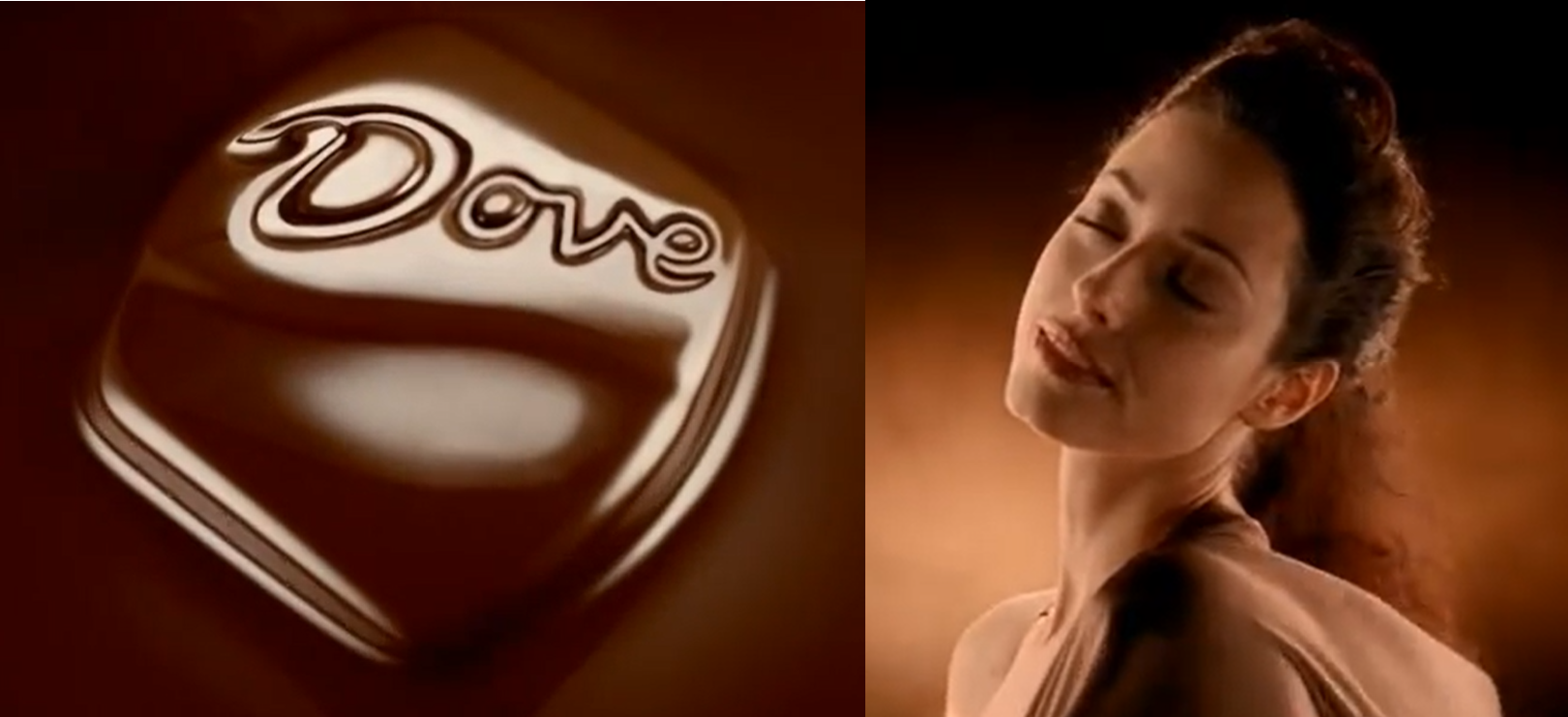
Stills from the 2008 Dove Senses Commercial at issue in this case. https://www.youtube.com/watch?v=VbgM1ulaBVc.
Mars claimed that Hershey’s commercials for its new Bliss chocolate line willfully infringed its copyright registrations for its Dove Senses Commercial because it had access to the Dove Senses Commercial. [45]. Specifically, Mars alleged that the Dove Senses Commercial has been airing on many networks throughout the United States from March 2008 to December 2009 (the time the lawsuit was filed). [46]. Mars additionally claimed that two former Mars employees who worked on the Dove Senses Commercial were hired by Hershey and specifically worked on the commercials for Hershey’s Bliss chocolate. [47].
As to whether the two commercials were substantially similar, Mars claimed that the Bliss commercial copied the above nine original elements in the Dove Senses Commercial. [48]. Mars further claimed that “the overall lighting, coloration and tone” of the two commercials were the same, and that both commercials have “recurring image[s] of a brown silk scarf.” [49].
Stills from the Bliss commercial are shown in the image below, and were attached to the Complaint as an exhibit. [50].
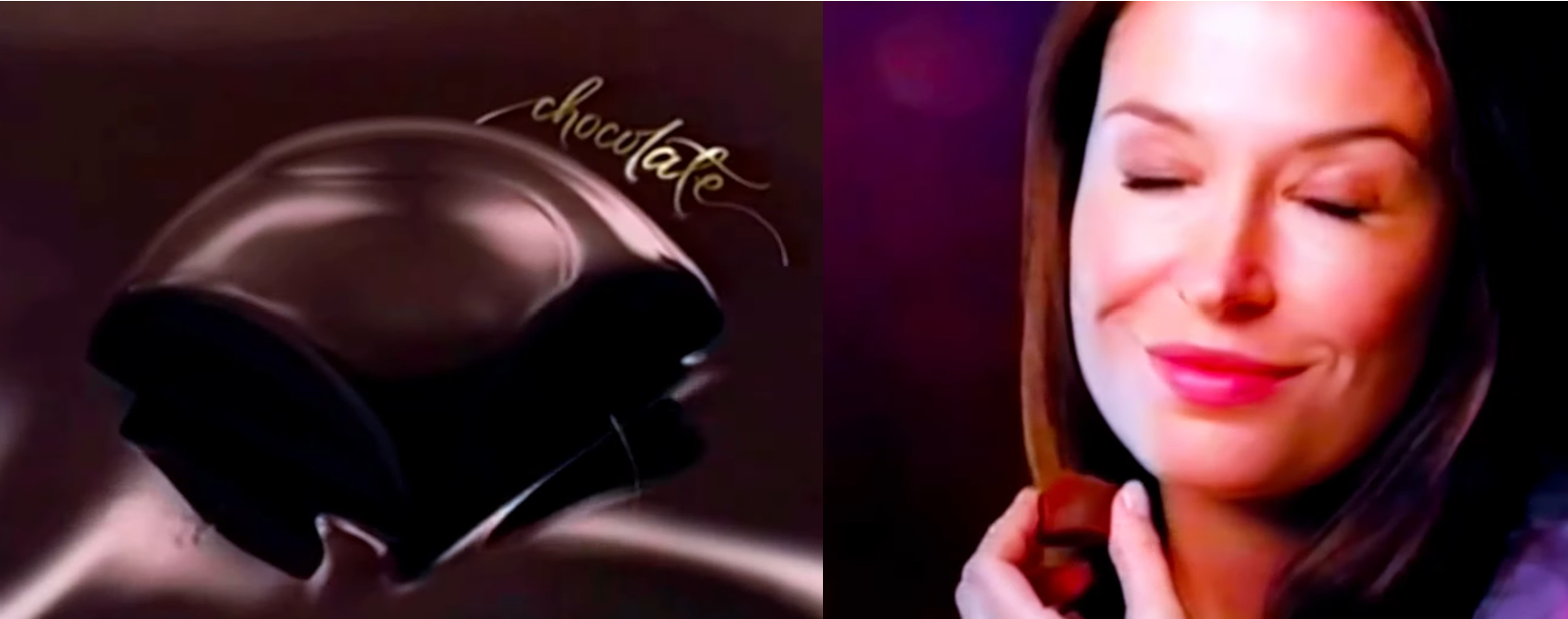
Stills from the 2008 Bliss Chocolate commercial at issue in this case. https://www.youtube.com/watch?v=mkxUx-rxy0I.
Regarding Mars’s trade dress claim, Mars alleged that it “also owns trade dress rights” in the above nine “original elements” that are protected by its copyright registrations, and it further owns trade dress rights “in the overall look-and-feel of the DOVE® Senses Commercials”. [51]. Mars did not plead that it had a registration for its trade dress rights in the DOVE Senses Commercial. [52].
In response to the Complaint, Hershey filed a Motion to Dismiss the Complaint or, in the Alternative, for Summary Judgment. [53]. In the Motion, Hershey argued that Mars failed to state a claim for copyright infringement because the two commercials were not substantially similar. [54]. Hershey also argued that Mars’s trade dress claim failed as a matter of law, in part, because any intellectual property rights in the DOVE Senses Commercial fell under copyright law, not trademark law. [55]. Mars responded in opposition of the Motion, arguing that it sufficiently pled its claims for copyright infringement and trade dress, and Hershey’s attempt to dismiss them was an attempt to “conceal the role played by former Mars employees in developing Hershey’s commercial and trade dress . . . .” [56].
The Court denied Hershey’s Motion, holding that Mars had sufficiently pled claims for copyright infringement and trade dress, and Hershey’s motion for summary judgment was premature. [57]. A few months later, Hershey and Mars reached a settlement and the case was dismissed.
And so, the second battle in the Candy Wars ended in a draw.
"day 142/365" by shehan365 is licensed under CC BY-NC-ND 2.0.
However, while the case ended in a settlement, in the greater scheme of the Candy Wars, Mars came out on top.
In 2016, eight years after its hyped debut, Hershey unceremoniously pulled Bliss off the shelves and it hasn’t been back since. [58]. While Hershey has never provided an explanation as to why, several consumer surveys indicate that it could just could not compete with DOVE. [59].
Tune in for the next installment in the Candy Wars Series!
Sources
[1] “A History of Goodness” The Hershey Company. Accessed August 24, 2025. <https://www.thehersheycompany.com/en_us/home/about-us/the-company/history.html>.
[2] Id.
[3] “Choose your Moment” The Hershey Company. Accessed August 24, 2025. <https://www.thehersheycompany.com/en_us/home/brands.html>.
[4] Id.
[5] “All About Mars” Mars, Incorporated and its Affiliates. Accessed August 24, 2025. <https://www.mars.com/about/>.
[6] “Our Brands” Mars, Incorporated and its Affiliates. Accessed August 24, 2025. <https://www.mars.com/our-brands>.
[7] Mars, supra note 5.
[9] Joel Glenn Brenner. The Emperors of Chocolate 72-73, 149, 151, 153-55 (1998).
[10] Id. at 160-161.
[10] “About Us, The Dove Chocolate Love Story” Dove Chocolate. Accessed November 2, 2025. <https://www.dovechocolate.com/our-story>.
[11] See id.
[12] See id.
[13] Id.
[14] Id.
[15] “Mars Acquires The Dove Bar.” The New York Times. Aug. 12, 1986. <https://www.nytimes.com/1986/08/12/business/mars-acquires-the-dove-bar.html>.
[16] Dove Chocolate, supra note 10; see id.; see Brianna York. “Dove Chocolate Bar (History, FAQ, Pictures & Commercials).” Snack History. Accessed November 2, 2025. <https://www.snackhistory.com/dove-chocolate-bar/>.
[17] Dove Chocolate, supra note 10.
[18] York, supra note 16; see Dove Chocolate, supra note 10.
[19] Dove Chocolate, supra note 10.
[20] Hannah Cole. “The Reason Hershey's Bliss Was Discontinued.” Mashed. Jun. 13, 2021. < https://www.mashed.com/330999/the-reason-hersheys-bliss-was-discontinued/>.
[21] Id.; Compl. [1] at ¶ 27 Dec. 8, 2009; Mars, Inc. v. The Hershey Co. 1:09-cv-01354 (E.D. Va.).
[22] Compl., supra note 21 at ¶ 30.
[29] Id. at ¶ 32; Exhibit B to Compl.; Exhibit C to Compl.
[30] See Compl., supra note 21 at ¶ 28.
[31] Brad Dorfman. “Hershey puts faith in Bliss to recapture market share.” Los Angeles Times. Feb. 19, 2008. <https://www.latimes.com/archives/la-xpm-2008-feb-19-fi-bliss19-story.html>.
[32] Id.
[33] Id.
[34] Id.
[35] Id.
[36] Compl., supra note 21 at ¶ 32; Exhibit B to Compl., supra note 21; Exhibit C to Compl., supra note 21.
[37] Compl., supra note 21 at ¶ 41.
[38] 17 U.S.C. § 106.
[39] 17 U.S.C. § 501(a).
[40] Feist Publ'ns, Inc. v. Rural Tel. Serv. Co., 499 U.S. 340, 361, 111 S. Ct. 1282 (1991).
[41] Murray Hill Publ'ns., Inc. v. Twentieth Century Fox Film Corp., 361 F.3d 312, 316 (6th Cir. 2004).
[42] Id. (quoting Kohus v. Mariol, 328 F.3d 848, 853-54 (6th Cir. 2003)) (citation omitted) (emphasis removed) (emphasis added).
[43] Compl., supra note 21 at ¶ 29.
[44] See id.; Exhibit A to Compl., supra note 21.
[45] Compl., supra note 21 at ¶ 41.
[46] Id. at ¶ 42.
[47] Id.
[48] Id. at ¶¶ 47-49.
[49] Id. at ¶¶ 50-51.
[50] See Exhibit D to Compl., supra note 21.
[51] Compl., supra note 21 at ¶ 33.
[52] See generally Compl., supra note 21.
[53] Memorandum of Law in Support of Defendants’ Motion to Dismiss or, in the Alternative, for Summary Judgment [45]. Dec. 8, 2009; Mars, Inc. v. The Hershey Co. 1:09-cv-01354 (E.D. Va.).
[54] Id. at 7.
[55] Id. at 23.
[56] Plaintiff’s Memorandum of Law in Opposition to Defendants’ Motion to Dismiss or, in the Alternative, for Summary Judgment [51] at 7. Dec. 8, 2009; Mars, Inc. v. The Hershey Co. 1:09-cv-01354 (E.D. Va.).
[57] Order [69] at 1-2. Dec. 8, 2009; Mars, Inc. v. The Hershey Co. 1:09-cv-01354 (E.D. Va.).
[58] Hannah Cole. “The Reason Hershey's Bliss Was Discontinued.” mashed. Jun. 13, 2021. <https://www.mashed.com/330999/the-reason-hersheys-bliss-was-discontinued/>.
[59] Id.